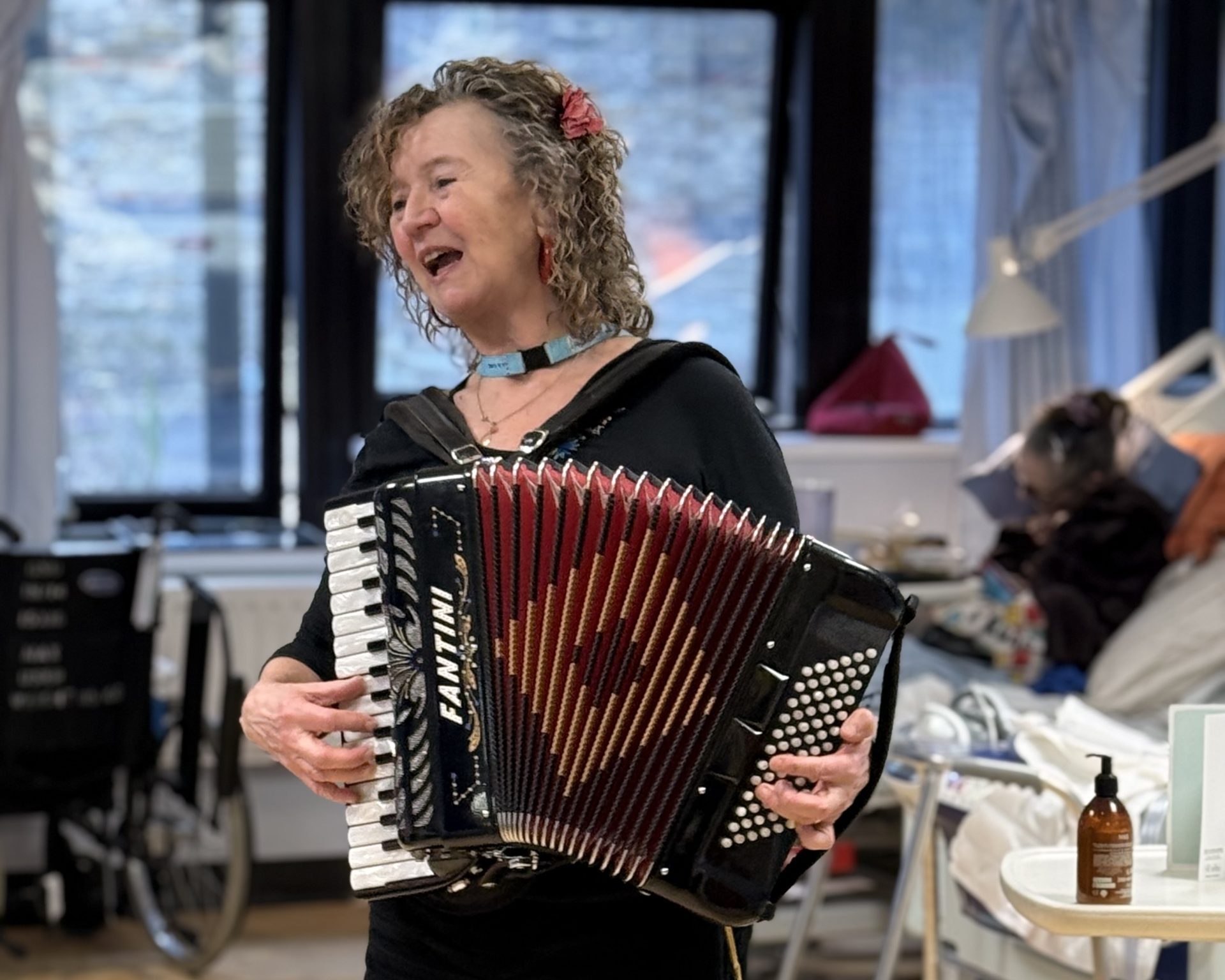
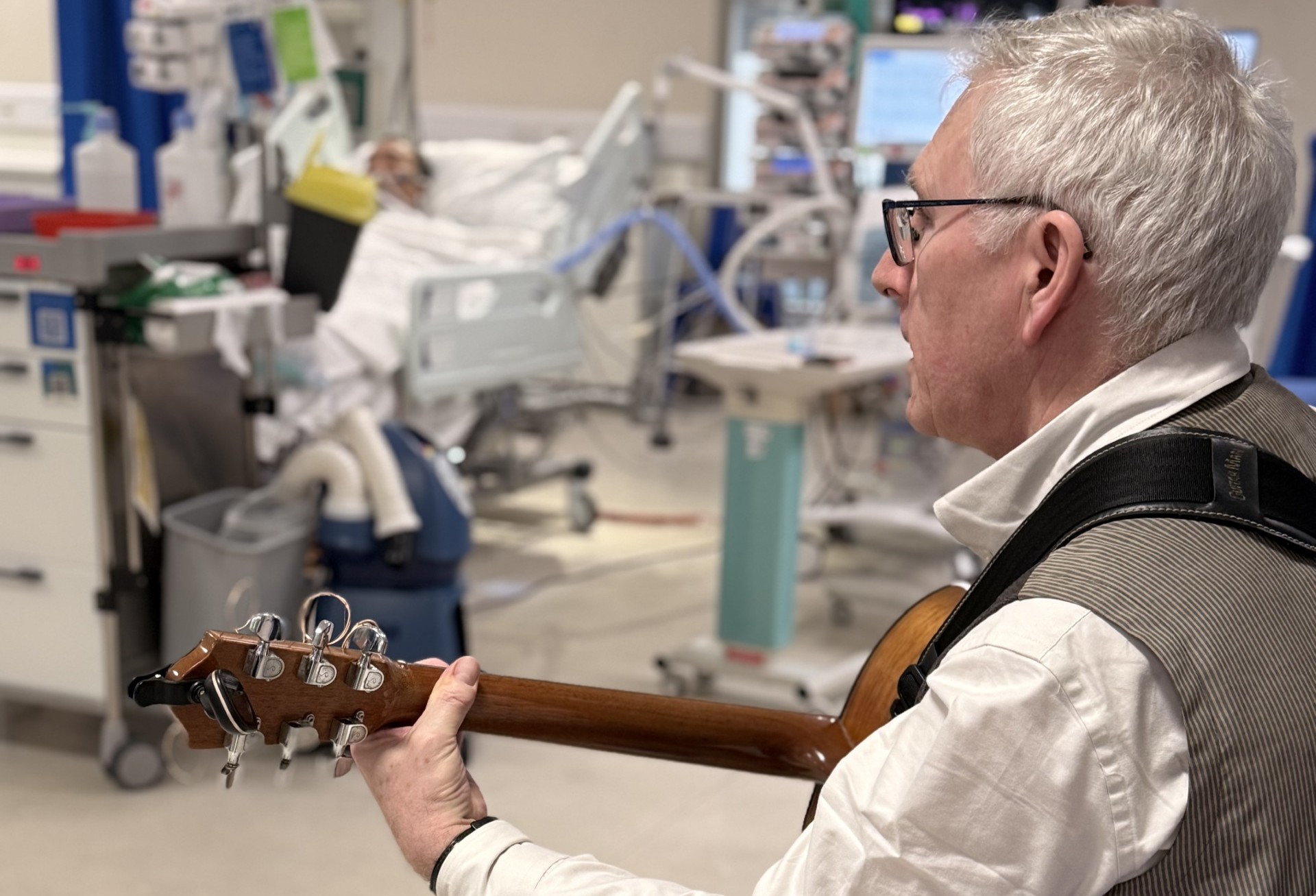
We’ve been sharing live music with patients at Homerton University Hospital’s Regional Neurological Rehabilitation Unit (RNRU) and Graham Stroke Unit as part of their rehabilitation journey.
James Sanderson, Occupational Therapy Apprentice at Homerton University Hospital’s Graham Stroke Unit explains: “We can’t all engage with physiotherapy in the same way, but we can all engage with music on a level that matters to us. It blends the universal and the personal in a way that very few other therapies can.”
Music is increasingly recognised as a useful tool in brain injury recovery. It connects multiple areas of the brain simultaneously and supports neuroplasticity, the brain’s ability to reorganise and form new neural connections. At the RNRU and Graham Stroke Unit, live music has been seen to encourage alertness, helping with emotional responses and communication.
James adds: “Live music activates different areas of cognition and memory that might not be as directly accessible if there are communication difficulties. You’re giving patients a stimulus that is globally understood, which means people at different stages of their recovery journey can engage with the music at the same time and in a similar way. Personal barriers become less evident. It’s wonderful to see that kind of shared experience, which music provides in a way that other group activities often don’t.”
Our musician, accordionist Martina Schwarz, visits Homerton University Hospital regularly. She explains: “I go from bay to bay with my accordion and I tend to take patients on a little musical journey around the world. I like to feel the room out and go with the flow. Having that flexibility works really well. I feel like the work I do with Music in Hospitals & Care actually enhances my other performances. It pushes me to be more inventive and interactive.”
Research and clinical observation show that live music can help reduce anxiety, improve mood, and support cognitive, physical and emotional responses following a brain injury. Singing and vocal exercises can be particularly beneficial for patients with language impairments, helping to improve articulation and memory recall.
Reflecting on the broader impact, James adds: “It’s a connection to a pre-condition life, a connection to tradition that stretches further back. It’s a really lovely way to access their own personal history, as well as cultural history. It also allows people to choose their own level of engagement. They can talk to the musician and shake some bells, and sing along, or they can just lie back and smile and enjoy the music.”
We work across health and care settings to share live music with people who may not otherwise get to experience it. The charity works with a variety of professional musicians across the UK, sharing the joy of live music and creating moments of connection for patients, residents, families and staff.