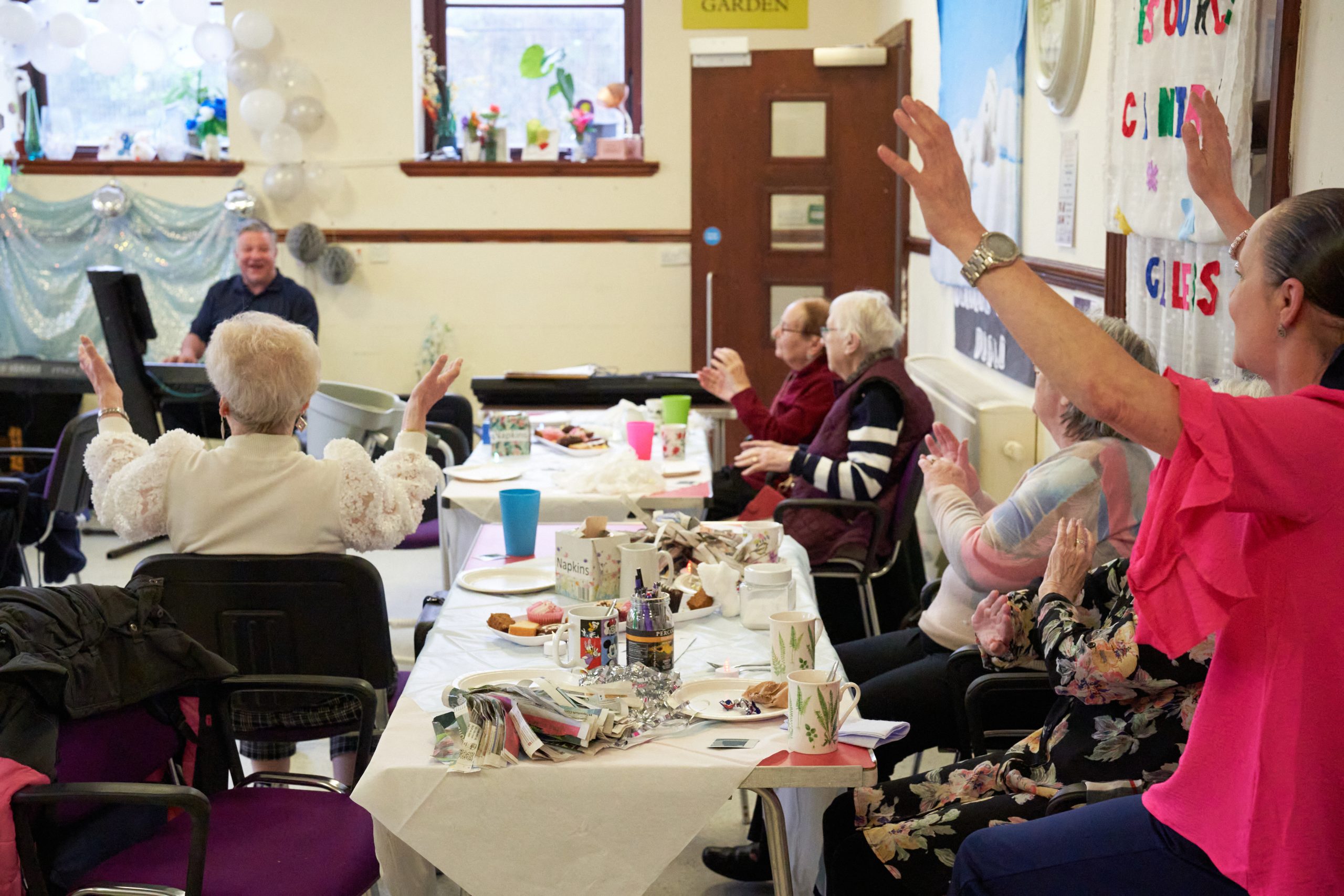
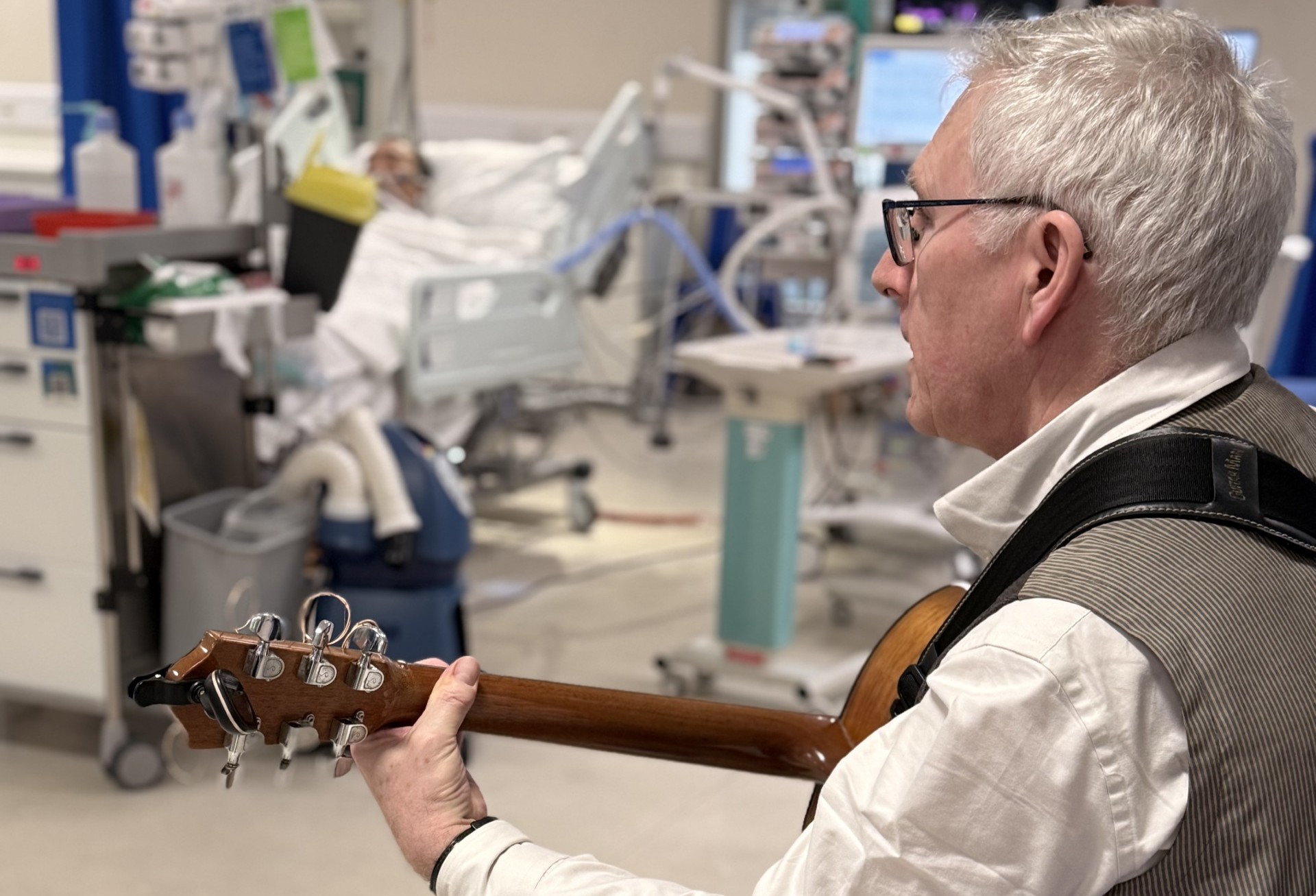
This World Hearing Day we’re highlighting the important role that live music plays in supporting the wellbeing of people who experience hearing loss. We’ve been sharing live music with the older people’s community group at the Yoker Resource Centre in Glasgow for several years, many of whom have a hearing impairment.
The sessions provide an opportunity for members to connect through song and a sense of shared history. For those with hearing difficulties, live music offers an inclusive and engaging way to take part in a communal activity.
Kirsty Gibbons, Project Coordinator at the Yoker Project explains: “We do have a number of members at the Yoker Project who experience hearing loss, and live music continues to play a hugely important role in their wellbeing.
Music at our group isn’t just something people passively listen to, it’s something they feel, connect with, and experience together. Even for those with significant hearing loss, the rhythm, vibration and shared atmosphere of live performance makes a visible difference to mood, confidence and social connection. You can see the lift in the room.
One member in particular, who very sadly passed away recently, was deaf and communicated through sign language with her staff member. She was incredibly proud to tell us about being part of a signing choir. She would describe how they felt the rhythm through the floor and signed the words together in time with the music. For her, music was never about perfect hearing, it was about belonging, expression and shared experience.
We’ve also seen how live music can reignite something people thought they had lost. One of our members with multiple and complex needs shared with one of our visiting musicians (who was playing keyboard) that she used to play piano. Given her current situation, she didn’t believe that was possible anymore. He gently encouraged her to try again. We brought a keyboard into the centre for her, and she played beautifully.
She now regularly plays for the group. The pride in the room when she chooses to play is palpable, the group actively support and celebrate her every time. Her daughter recently told me they’ve since bought a keyboard for home as well, so she can continue playing both at home and at the centre. That return to music would never have happened without seeing and experiencing live music in her group first.
That’s why communal live music matters so much. It creates collective energy. It reduces isolation. It rebuilds identity. It reminds people of who they are beyond diagnosis or limitation. For many of our members, including those living with hearing loss, these shared musical moments are deeply protective for mental wellbeing.”
Live music is often perceived as difficult to engage with for those who have a hearing impairment. However, it can be experienced in a variety of ways, such as through the rhythm or vibration of a song, lip reading, or singing from memory. That’s why we work across health and care settings throughout the UK to share live music with those who might not otherwise get to experience it.