This Brain Injury Awareness Month, we’re shining a light on the important role that live music plays in patient recovery. It can help to reduce anxiety and improve emotional wellbeing. Engaging with live music in a physical way can support physiotherapy by building muscle strength and improving coordination.
The awareness month offers an opportunity to better understand, support those affected, and highlight the importance of rehabilitation through activities such as live music.
For the past year, we’ve been bringing live music experiences to patients and staff at Homerton University Hospital’s Regional Neurological Rehabilitation Unit (RNRU). This specialist ward supports patients aged 18+ who have experienced a neurological incident, such as a brain injury, stroke, or other condition affecting the nervous system.
Most patients on the ward have sustained severe, life-changing traumatic brain injuries, often requiring long-term care and rehabilitation. Many also face significant speech and communication challenges.
Alexis Azcueta, Leisure Coordinator, has seen first-hand how these sessions make a difference:
“Patients who have issues with communication, memory or emotion, I see them singing along to songs. While they often can’t form new sentences, they can remember a melody and most of the words to a song.
For patients with limited mobility, it’s wonderful for them to experience live music, it’s something they might not otherwise have the opportunity to enjoy. It is something that everyone can take part in.
It can be quite emotional for patients as well. It can take them back to different times, a time before their brain injury. It’s not necessarily a bad thing for patients to get emotional like this, it allows them to process their feelings and can even empower them to embrace those emotions.”
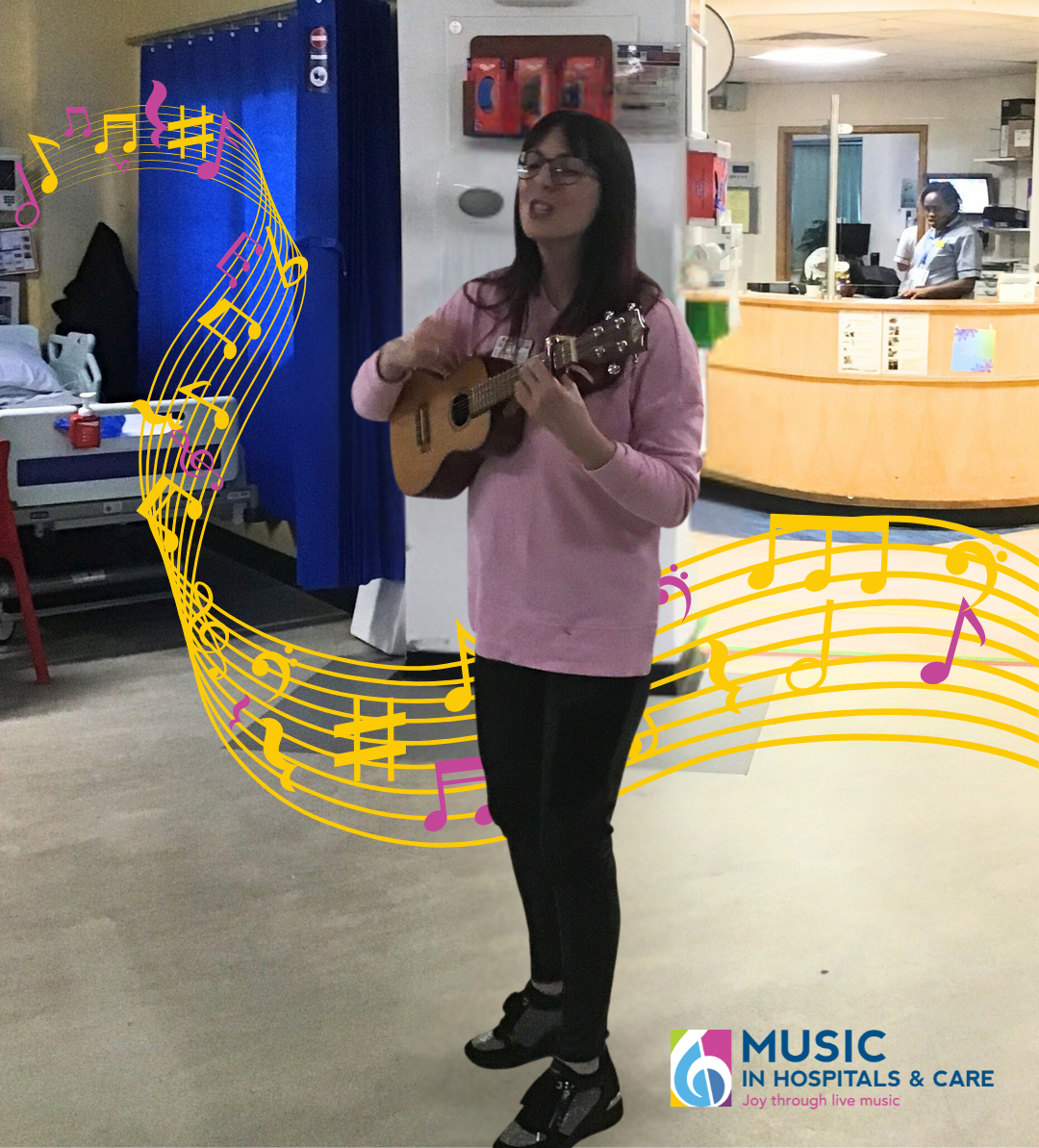
Music in Hospitals & Care musician, Elkie Jeffery, a ukulele player, has visited the RNRU several times and uses interactive music activities like Name That Tune to engage patients in a fun and interesting way. Reflecting on the impact of live music, Elkie said:
“There is nothing like live music to lift the spirits, and you can see it on the faces and in the body language of the patients and their families – it offers comfort or an uplifting moment at times of stress and worry, not to mention the fabulous NHS staff that really appreciate the music too. I gain so much from playing – it is a joy to share music with people who need it the most.”
It can be difficult to know how to support a friend or family member with an acquired brain injury. Alexis shares her insights on small, manageable steps:
“My advice to anyone who cares for someone with a brain injury is to be patient and try to be as clear and as simple as possible with your words and the language that you choose. It might seem like common sense, but if you want to connect with someone with a brain injury, being more concise is a great place to start.”